

Introduction
Climate change is still worsening as humans wastefully deposit co2 into the atmosphere. As the series go, here’s another natural disaster that appears to be impacted by climate change. Earthquakes! As odd as it seems on the surface, lets look at what the literature says.
Sea level change
A study done by Kim & Lee (2023) report about earthquakes in the Korean peninsula being likely influenced by the rise in sea level which is connected to the shift of tectonic plates leading to earthquakes. With sea level expecting to rise, earthquakes around the globe should become more frequent and potentially more devastating. Most cities do not have the infrastructure to deal with this type of natural disaster, which can affect a very wide area. Earthquakes also lead to tsunamis which were covered in last weeks post! Those effects combined may lead to terrifying consequences if we do not work toward reducing the impacts of climate change.
Correlation?
Earthquakes have been found to have a strong correlation with an increase in the temperature fluctuations of the globe, which have been more drastic due to climate change (Sadhukhan et al., 2021). Using neural network models, the authors tested whether the magnitude of earthquakes was related to the fluctuation in global temperature. These models did indicate a strong correlation, meaning that earthquakes will become more powerful in the future, due to climate change. More powerful earthquakes means that engineers wills be plagued with the task of developing more intense protective measures, while cities that do not have the capacity or history to deal with earthquakes will suffer.
Perceptions of risk?
With the Fukushima nuclear power plant disaster, researchers tested the perception civilians had on nuclear power plants, earthquakes and climate change. This will work as a gauge of people interest in the importance of climate change and also tests their understanding of how these problems are interconnected. Bian et al., (2021) found that risk perceptions for these topics were strongly correlated. This indicated that there are people who are generally more sensitive to risk than the issues at hand. Not that that is necessarily a bad thing, especially when it comes to climate change, as many things are impacted, yet it means that there should perhaps be a change in the information presented to those who do not usually worry about the risk to ensure the language is effective.
Conclusion
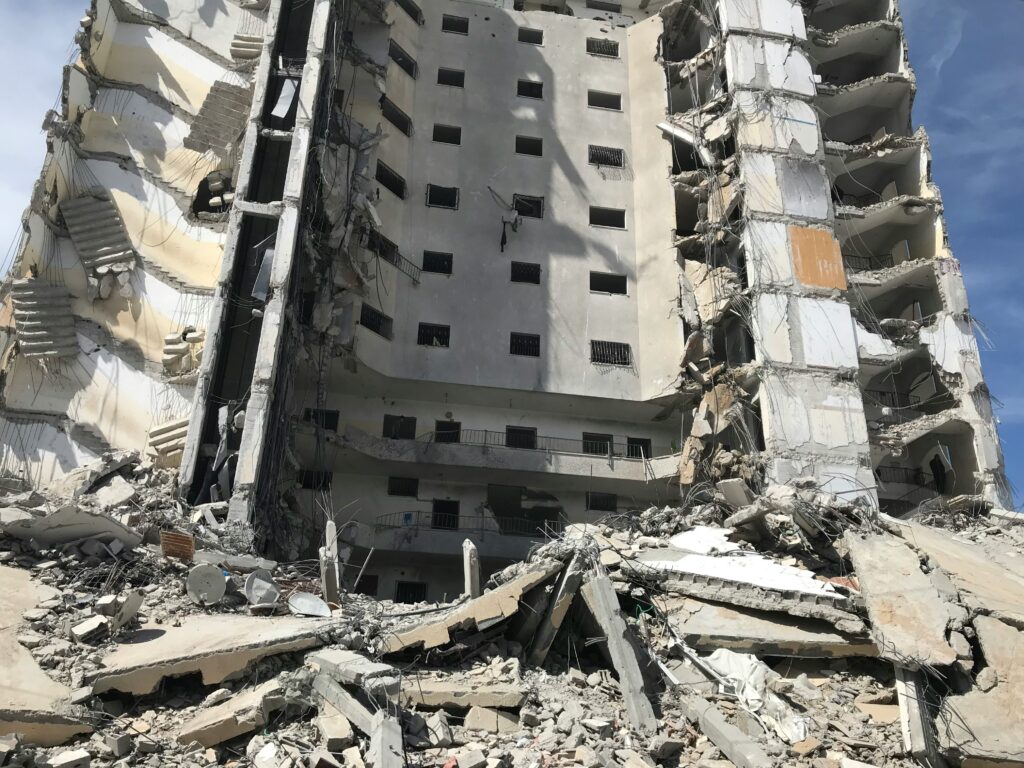
The magnitude of earthquakes appears to be on the rise and will continue to be on the rise due to climate change. The rising sea level will lead to a host of natural disasters, impacting many communities around the world. Places that were not previously at risk will become, and those that were in the past may see a more destructive future. That is, if we do not combat climate change in a meaningful way.
References:
- Kim M-J, Lee H-K. 2023. Long-term patterns of earthquakes influenced by climate change: Insights from earthquake recurrence and stress field changes across the Korean Peninsula during interglacial periods. Quaternary Science Reviews. 321:108369–108369. doi:https://doi.org/10.1016/j.quascirev.2023.108369.
- Sadhukhan B, Chakraborty S, Mukherjee S. 2021. Investigating the relationship between earthquake occurrences and climate change using RNN-based deep learning approach. Arabian Journal of Geosciences. 15(1). doi:https://doi.org/10.1007/s12517-021-09229-y.
- Bian Q, Han Z, Veuthey J, Ma B. 2021. Risk perceptions of nuclear energy, climate change, and earthquake: How are they correlated and differentiated by ideologies? Climate Risk Management. 32:100297. doi:https://doi.org/10.1016/j.crm.2021.100297.